Can you explain the concept of a line with no end (soft lines)?
The concept of a line with no end, often referred to as a "soft line" or an "infinite line," can be understood in different ways depending on the context. Here are two interpretations:
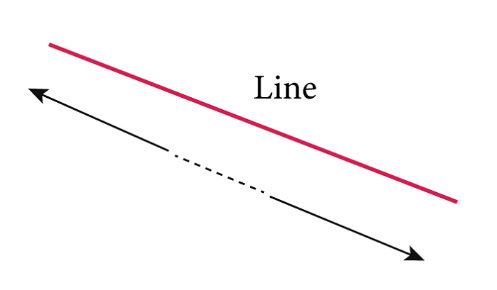
1. Geometric Lines:
- In Euclidean geometry, a line is defined as a one-dimensional figure that extends infinitely in both directions. It has no thickness and no starting or ending point. This type of line has no "ends" in the literal sense.
- However, we can still refer to these lines as having "positive" and "negative" directions to indicate movement along the line in either direction.
2. Figurative and Conceptual Lines:
- In everyday language and abstract concepts, "lines" can be used metaphorically to represent trajectories, trends, or boundaries. In these cases, talking about a line with no end signifies something that:
- Continues indefinitely: Like a journey with no clear destination or a thought process that keeps expanding.
- Has no limit or fixed boundary: Like the endless possibilities in a creative endeavor or the ever-evolving nature of knowledge.
- Breaks through traditional limitations: Like a social movement challenging conventional norms or a scientific discovery opening up new avenues of exploration.
It's important to note:
- Lines with no end in the geometric sense are theoretical constructs and cannot be physically drawn or represented.
- Lines with no end in a figurative sense are useful tools for conceptualizing various situations or ideas, but their interpretation depends on the specific context.
Overall, understanding the concept of a line with no end requires considering both its mathematical definition and its broader metaphorical usage. The specific meaning depends on the context and the purpose of the line being described.

Comments
Post a Comment
Thanks